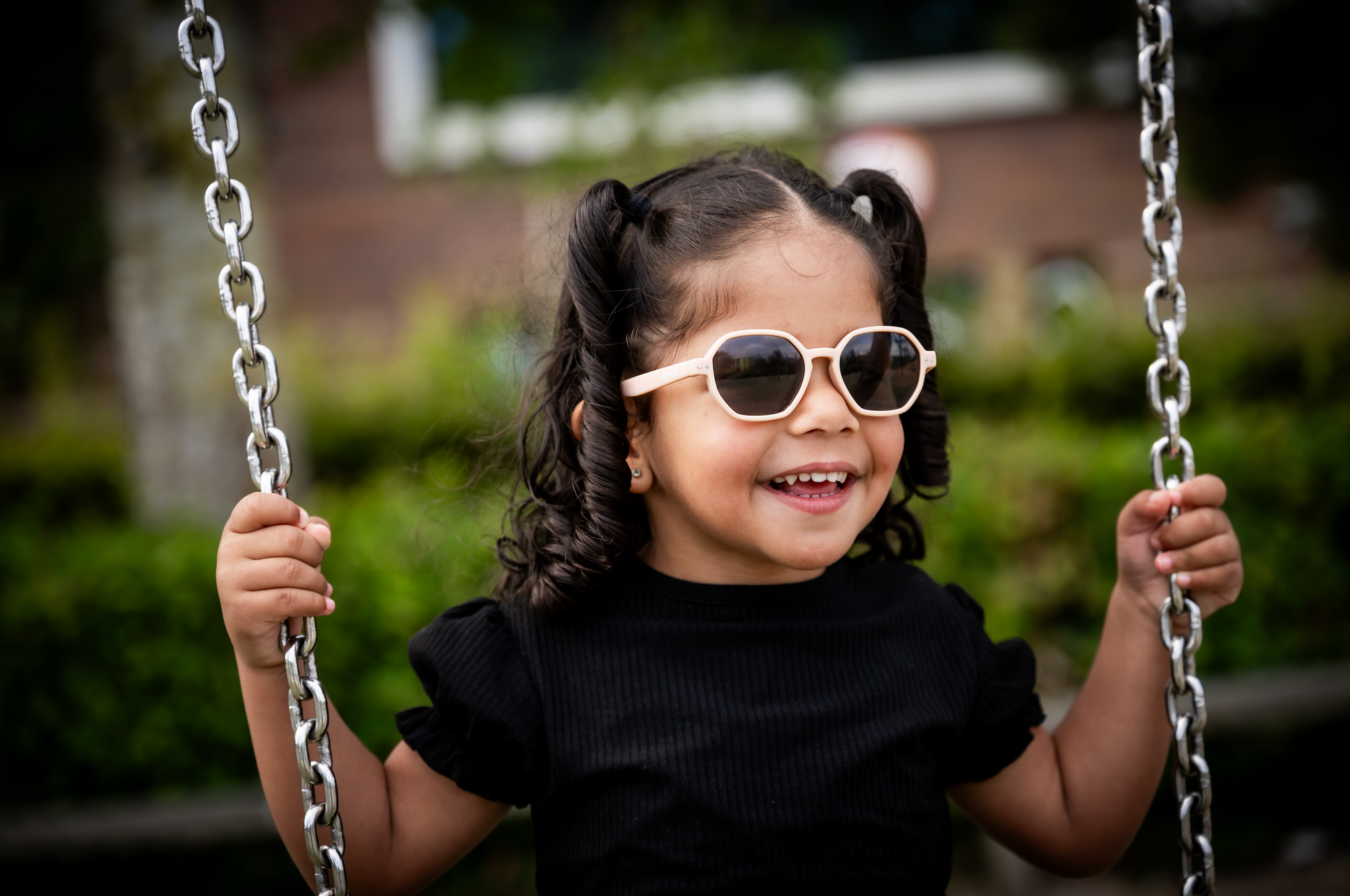
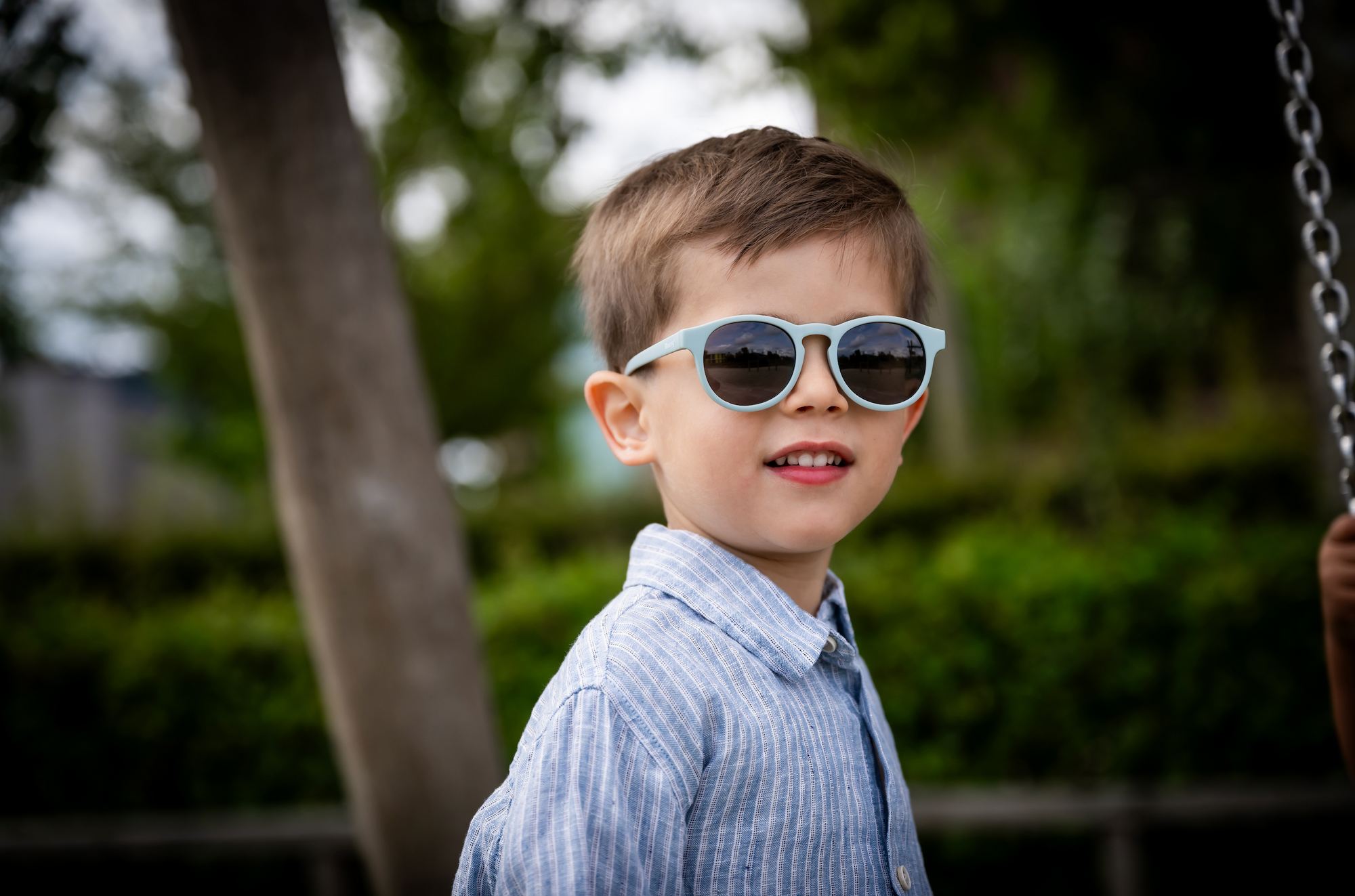
Sunglasses for your child on a winter sports holiday? Here’s what you need to know!
Are you going on a winter sports holiday with your baby or child? Find out why UV protection in the snow is so important, when category 3 is suitable, and what the difference is between sunglasses and ski goggles. With handy tips from Maesy for a comfortable and sunny winter sports holiday!
Snow, fresh mountain air, and enjoying a wonderful winter sports holiday together. Whether your child is sitting on a sled for the first time, throwing snowballs, or carefully taking their first turns on skis: the mountains are one big adventure! ❄️
But did you know that the winter sun can be very bright for little eyes? Good eye protection is especially important in the mountains, where snow reflects sunlight.
What kind of sunglasses does your baby or child need for winter sports? Is UV400 enough, what does category 3 mean, and when is it better to choose ski goggles? We’ll explain and share helpful tips for a carefree holiday in the snow! ☀️
☀️ Why are sunglasses important for winter sports?
When we think of sun protection, we often picture a warm summer day at the beach. But eyes can also be exposed to a lot of UV radiation in winter.
There are two important reasons for this in the mountains:
- ✔️ More UV radiation at higher altitudes: The higher you go in the mountains, the less atmosphere there is above you to block UV radiation.
- ✔️ Reflection off the snow: Fresh snow can reflect a large proportion of incoming UV radiation, sometimes up to around 80%.
This means your child can be exposed not only to direct sunlight, but also to light reflected off the snow.
UV radiation can still be present even when it’s cold or the sun disappears behind the clouds. So a chilly winter day doesn’t necessarily mean sun protection is unnecessary.
👶 Why do babies’ and children’s eyes need extra protection?
Babies and young children are growing rapidly. Their eyes are too.
The lenses in young children’s eyes filter out less UV radiation than those in adults’ eyes. As a result, more radiation can penetrate deeper into the eye.
Too much exposure to UV radiation can damage the eyes. A high dose of UV radiation can even cause snow blindness, a painful injury to the cornea also known as photokeratitis.
Fortunately, there’s a lot you can do to protect little eyes. For example, provide good sunglasses or ski goggles, plenty of shade, and limit prolonged exposure to bright sunlight.
For the very youngest children, it’s also a good idea to avoid direct, bright sunlight as much as possible.
😎 What should good children’s sunglasses for winter sports offer?
Not all sunglasses are equally suitable for a day in the snow. So don’t just focus on how they look, but especially on their protection and fit.
1. UV400 protection
Sunglasses with UV400 protection block UV radiation with wavelengths up to 400 nanometers, including harmful UVA and UVB rays.
That’s important on sunny summer days, but especially in the mountains.
Good to know: dark lenses don’t automatically mean that sunglasses offer more UV protection. The UV filter determines how well they protect against UV radiation.
2. The right filter category
The filter category indicates how much visible light the lenses let through.
Category 3 lets through about 8 to 18% of visible light and is suitable for bright sunlight. This makes it a practical choice for many sunny winter days.
Category 4 is even darker and intended for exceptionally bright conditions, such as at high altitudes or on glaciers. These lenses let very little visible light through and may be less comfortable for children in changing light conditions.
So, the most suitable category depends on the conditions and the activity. Category 3 can be a great choice for a sunny walk or playing in the snow, for example. In extreme conditions, specialist eye protection is important.
Want to know exactly what these labels mean? Read our blog UV400, category 3, and CE marking on children's sunglasses.
3. A comfortable fit
Sunglasses should fit well without pinching. Especially when playing outdoors or walking, it's helpful if they don't keep slipping off your child's nose.
Also make sure the lenses cover the eyes well, so as little bright sunlight as possible gets in around the edges.
4. Polarized lenses to reduce glare
When sunlight reflects off snow, it can cause bothersome glare.
Polarized lenses help reduce certain reflections. This can make looking around in bright light more comfortable.
Keep in mind: polarization is not the same as UV protection. A good UV filter is still important. Also, polarized lenses can make some reflections on ice less visible, which is something to consider during winter sports.
⛷️ Sunglasses or ski goggles: which are better for children?
A question many parents have: can my child simply wear sunglasses during winter sports, or do they need special ski goggles?
That depends mainly on what you plan to do.
| Activity | Suitable eye protection |
|---|---|
| Walking in the mountains | Well-fitting sunglasses with UV400 |
| Playing in the snow | Well-fitting sunglasses with UV400 |
| Riding the sled together | Sunglasses with UV400, suited to the conditions |
| Skiing or snowboarding | Suitable ski goggles with UV protection |
| Very bright sun at high altitude | Eye protection suited to extreme conditions |
For walking, sledding, and playing in the snow, a good pair of children's sunglasses can be a great option.
Will your child actually be skiing or snowboarding? In that case, suitable ski goggles are generally the better choice. They fit more closely around the eyes to protect against wind, snow, and cold, and can be worn comfortably with a ski helmet.
When choosing ski goggles, also look for the right UV protection, filter category, ventilation, and fit.
💛 Why is a Maesy sunglasses a great choice for winter sports?
At Maesy, we believe little adventurers should be able to enjoy the outdoors with good protection all year round. Even when the sun shines on the snow!
Our baby and children's sunglasses combine:
- ✔️ UV400 protection: Against harmful UVA and UVB radiation.
- ✔️ Category 3 lenses: Reduce bright visible sunlight.
- ✔️ Polarized lenses: Help reduce annoying glare.
- ✔️ Flexible TPE frame: Durable, lightweight and comfortable.
- ✔️ Adjustable elastic strap: For extra security on our baby and toddler models.
That makes our sunglasses a great choice for all kinds of winter moments, from a walk through a snow-covered village to enjoying the mountain air together on a sunny terrace.
For skiing and snowboarding, we recommend using special, well-fitting ski goggles.
❄️ 6 handy tips for winter sports with your baby or child
Good eye protection is important, but there are other things to keep in mind during a winter sports holiday with children.
1. Protect your skin from the winter sun too
Because of the cold, you may not notice how strong the sun is. So use suitable sunscreen on exposed skin, and don’t forget areas like the nose, cheeks and ears.
2. Find a sheltered spot regularly
Especially for young babies, it’s a good idea to limit prolonged exposure to bright sun, wind and cold. A sheltered spot or a break indoors can be very nice.
3. Check that the sunglasses fit well
Sunglasses that keep slipping down offer less protection and can be annoying while playing.
Not sure about the size? Then take a look at our blog The right sunglasses size for your baby or child.
4. Be prepared for changing weather
The weather can change quickly in the mountains. In fog, snowfall and low light, dark sunglasses may be less comfortable.
So choose eye protection to suit the weather and activity. Good ski goggles with suitable lenses can be useful for winter sports when light conditions change.
5. Don’t forget warm clothing and a suitable helmet
Warm gloves, a good hat and layers of clothing make a day outdoors much more comfortable.
Is your little one going skiing or snowboarding? Make sure they have a well-fitting ski helmet and a ski goggle that fits with it.
6. Take a break in good time ☕
Playing in the snow takes energy. And for little children, the cold, altitude and all the new experiences can be quite tiring.
So make sure to take regular breaks to warm up, have a drink and relax. That way, winter sports stay fun for everyone!
❓ Frequently asked questions about sunglasses for children on a winter sports holiday
Does my child need sunglasses for a winter sports holiday?
Yes, good eye protection is important during winter sports. UV exposure is often higher in the mountains, and snow can reflect a lot of sunlight. Sunglasses with UV400 protection may be suitable for walking and playing in the snow. Proper ski goggles are generally more practical for skiing and snowboarding.
Is category 3 suitable for winter sports?
Category 3 is suitable for bright sunlight and can be comfortable on sunny winter days. In exceptionally bright conditions, such as on a glacier, darker specialist eye protection may be needed. The right choice depends on the activity, altitude, and light conditions.
What's the difference between children's sunglasses and ski goggles?
Regular children's sunglasses protect against UV radiation and bright sunlight, provided they have a suitable UV filter. Ski goggles generally fit more closely around the eyes to protect against wind, snow, and cold, and are designed to be worn with a ski helmet.
Can my baby wear sunglasses in the snow?
Yes, as long as the sunglasses fit well and comfortably. For young babies, adequate shelter and avoiding prolonged exposure to bright sunlight and cold remain important. Keep a close eye on your baby and always use sunglasses under supervision.
Can your child get snow blindness without sunglasses?
It can happen. A high dose of UV radiation can cause painful damage to the cornea, also known as snow blindness. Symptoms can include pain, watery eyes, redness, and severe sensitivity to light. Do you suspect your child has snow blindness? Have their eyes examined by a medical professional.
Are polarized sunglasses better in the snow?
Polarized lenses can reduce bothersome glare from snow, sometimes providing extra visual comfort. However, polarization does not replace a UV filter and can make certain reflections on ice less visible. Proper ski goggles are important for skiing and snowboarding.
Do children need UV protection on cloudy days too?
UV rays can be present even on cloudy days. Especially in the mountains and in snowy conditions, it's important to consider the UV index, weather, and activity when choosing eye protection.
🌈 Ready for a sunny adventure in the snow?
Winter sports with children are a wonderful way to make memories together. From the first snowflakes to an afternoon of sledding and hot chocolate after playing outside. ❄️
With the right eye protection, warm clothing, and plenty of breaks, you can fully enjoy everything the mountains have to offer together.
And are you going for a walk or enjoying some playtime in the snow? Then a comfortable Maesy pair of sunglasses with UV400 protection can be a great addition.
➡️ Discover our Maesy baby sunglasses and get ready for your next sunny winter adventure! 💛