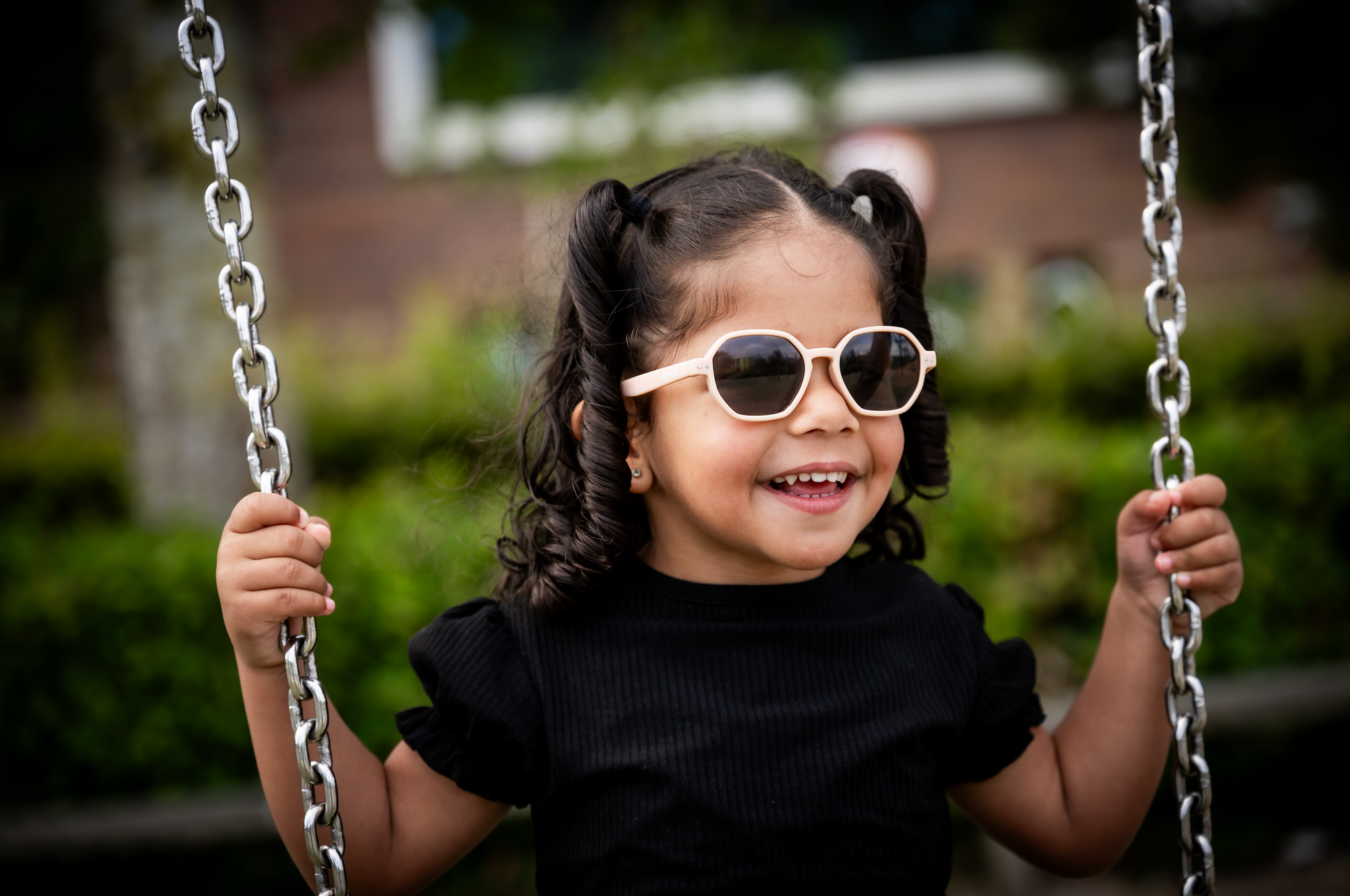
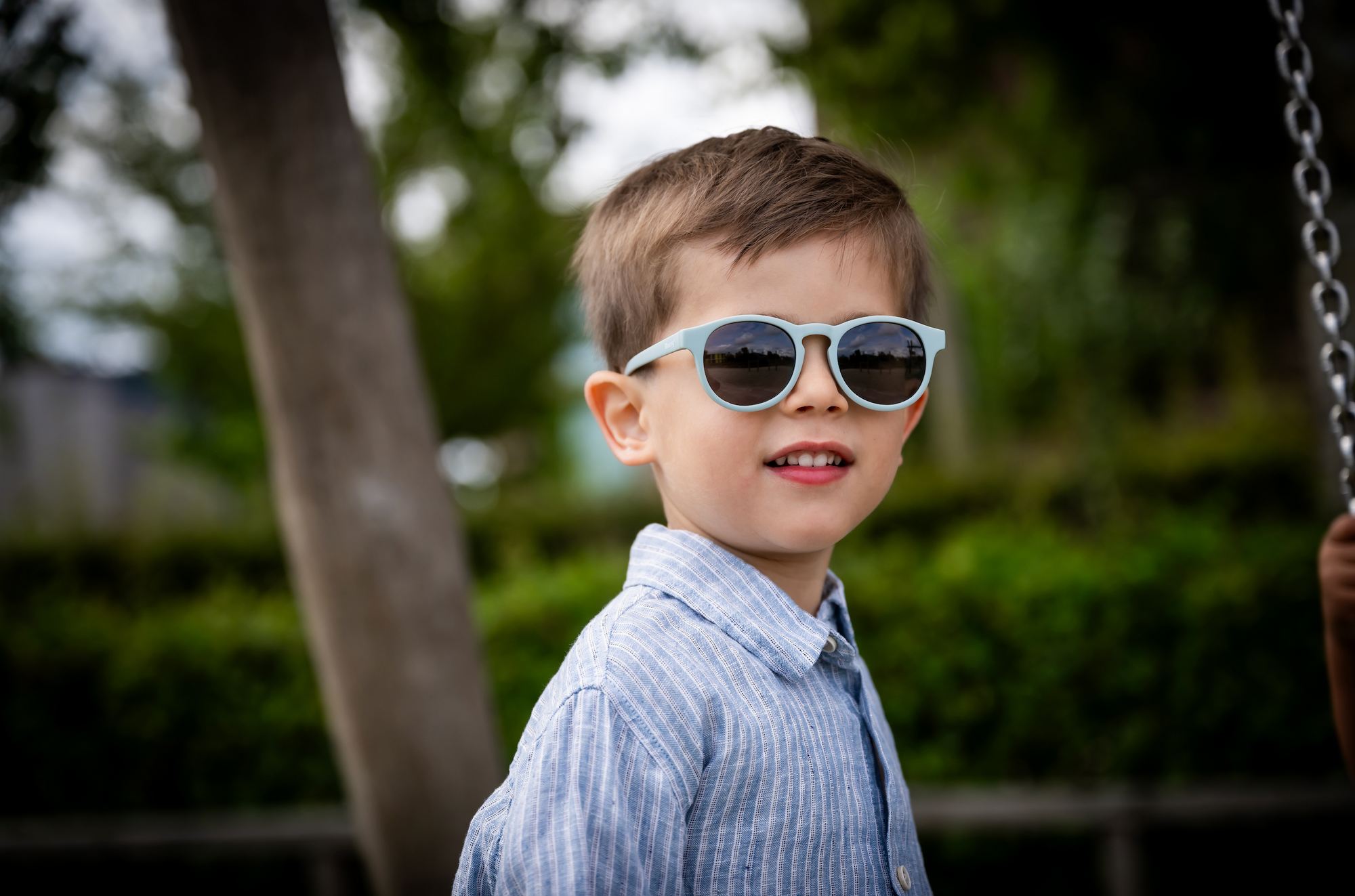
Why your baby or child also needs sunglasses in cloudy weather!
Does your baby or child also need sunglasses when it's cloudy? Find out how much UV radiation passes through clouds, why the UV index matters more than the weather, and when extra eye protection is a good idea. With practical tips from Maesy for sunny and cloudy days!
You look outside and see mostly clouds. No clear blue sky, no bright sunshine and maybe even a little rain. Sunglasses can stay at home today, right? ☁️
Not always! Even when the sun is hidden behind clouds, there can still be quite a lot of UV radiation. This is especially important to bear in mind for babies and young children.
But does your baby or child really need sunglasses when it’s cloudy? How much UV radiation gets through the clouds, and when is extra protection a good idea?
We’ll explain and share handy tips for all your little and big outdoor adventures. Even when the sun isn’t out! 💛
☁️ Does UV radiation get through clouds?
Yes! UV radiation can reach the Earth’s surface even on a cloudy day.
But how much UV radiation gets through the clouds varies. For example, thin wispy clouds block less radiation than a thick, solid blanket of clouds.
When the sky is heavily overcast, UV radiation levels are generally lower than under a clear sky. Still, UV intensity can be high enough to make sun protection important, even when it’s cloudy.
And did you know that patchy cloud cover can sometimes temporarily increase UV radiation? That’s because clouds can reflect and scatter sunlight.
So a cloudy sky doesn’t automatically mean there’s little UV radiation.
💡 Maesy tip: Don’t just look at how sunny it is; check the UV index too. It gives you a much better idea of when your little one needs extra sun protection.
☀️ What is the UV index, and when is sun protection necessary?
The UV index indicates how much UV radiation reaches the Earth’s surface. In the Netherlands, it’s also known as “zonkracht” (sun intensity).
The higher the UV index, the stronger the UV radiation and the more important it is to protect the skin and eyes.
Here are the key values at a glance:
| UV index | UV intensity | What does it mean? |
|---|---|---|
| 0-2 | Low | Under normal conditions, additional UV protection is usually not necessary. |
| 3-4 | Moderate | Protect your little one’s skin and eyes from UV radiation. |
| 5-6 | High | Take extra care with shade, clothing and eye protection. |
| 7 and above | Very high | Limit exposure to the strong midday sun and protect your little one well. |
From a UV index of 3, it’s a good idea to pay attention to sun protection, even when it’s cloudy.
For example, you can check the expected UV index on the KNMI website.
Note: It's still best to keep very young babies out of direct, bright sunlight as much as possible, regardless of the UV index.
👶 Why are babies' and children's eyes more sensitive to UV rays?
Babies and young children are developing rapidly. Of course, that includes their eyes.
Young children's eye lenses filter UV rays less effectively than adults' lenses. As a result, more of these rays can penetrate deeper into the eye.
Prolonged exposure to UV rays can contribute to eye damage later in life. That's why good sun protection is important from an early age.
Sunglasses with UV400 protection can help, but they're not the only way to protect your child's eyes.
Plenty of shade, a sun hat with a wide brim, and avoiding prolonged exposure to bright sunlight are just as important.
🌤️ When are sunglasses useful in cloudy weather?
Not every gray day calls for sunglasses. But there are plenty of times when extra eye protection can be helpful or a good idea.
🌳 During outdoor play
Even when the sun disappears behind a cloud now and again, the UV index can still be quite high.
Playing outside for a long time? Check the UV strength and make sure there's enough shade and suitable protection when the UV index is higher.
🚶 During a walk with the stroller
A walk in the fresh air is lovely, even on a cloudy day!
Use the canopy when needed to keep your baby's face out of direct sunlight. When the UV index is higher, a well-fitting pair of baby sunglasses can offer extra protection.
Always make sure there's enough ventilation in the stroller.
🚲 During a bike ride
Your child may spend a long time outdoors on a bike ride. And even when it feels cool or the sky is cloudy, the sun's UV strength can still be high.
Comfortable sunglasses can be useful then, especially when bright sunlight breaks through now and again.
🏖️ At the beach or by the water
Water and light-colored surfaces such as sand can reflect UV rays. This means your child may also be exposed to UV rays indirectly.
So a cloudy day at the beach doesn't automatically mean you can skip sun protection.
Make sure there's enough shade and check the UV index before you head out.
😎 What should you look for in a good pair of children's sunglasses?
Whether you're looking for sunglasses for sunny days or for times when the sun peeks out from behind the clouds now and then, good protection and comfort remain important.
Pay particular attention to these features:
- ✔️ UV400 protection: Protects against harmful UVA and UVB rays.
- ✔️ A comfortable fit: The sunglasses shouldn’t pinch or keep slipping down.
- ✔️ Good coverage: The lenses should provide good protection for the eyes.
- ✔️ A suitable filter category: The lenses should be suitable for the light conditions.
- ✔️ A lightweight frame: So your child can wear the sunglasses comfortably.
At Maesy, our baby and children’s sunglasses have UV400 protection and category 3 lenses. This makes them suitable for bright sunlight.
In very low daylight or dark, heavily overcast conditions, category 3 sunglasses may be unnecessarily dark. So always consider the conditions.
Want to learn more about the different labels on sunglasses? Read our blog UV400, category 3 and CE: what do they mean for children’s sunglasses?.
💛 Why choose Maesy sunglasses for babies or children?
At Maesy, we believe children should be able to enjoy the outdoors in comfort and with good protection, whether the sun is shining brightly or occasionally disappears behind a cloud.
That’s why our sunglasses combine:
- ✔️ UV400 protection: Against harmful UVA and UVB rays.
- ✔️ Category 3 lenses: Reduce bright visible sunlight.
- ✔️ Flexible TPE frame: Durable, lightweight and comfortable.
- ✔️ Different sizes: For babies, toddlers, preschoolers and older children.
- ✔️ Adjustable strap: For extra security on our baby and toddler models.
That way, your child can enjoy sunny adventures with good protection and a comfortable fit. ☀️
Not sure about the size? Take a look at our blog How to choose the right sunglasses size for your baby or child.
🌈 4 handy tips for sun protection on cloudy days
1. Check the UV index
Cloudy skies don’t tell you everything about UV levels. So check the UV index when you’re spending a long time outdoors.
2. Seek plenty of shade when the UV index is high
Even on cloudy days, it may be wise to avoid the bright midday sun, especially with young children.
3. Combine different forms of protection
Sunglasses are a great addition, but don’t forget protective clothing, a sun hat and suitable sunscreen for exposed skin.
4. See what’s comfortable for your child
Is it very dark outside? Then sunglasses aren’t always necessary. Is the sun coming out or is the UV index high? Then extra protection can be helpful.
The most important thing is to consider the conditions and what your child needs.
❓ Frequently asked questions about UV radiation in cloudy weather
Do UV rays pass through clouds?
Yes. UV rays can reach the Earth’s surface even on cloudy days. How much radiation gets through depends on the type and thickness of the clouds. Thin clouds generally block less UV radiation than a thick, solid cloud cover.
Should my baby always wear sunglasses when it’s cloudy?
No, not always. Pay attention to the UV index and the amount of light. When the UV index is higher, well-fitting sunglasses can provide extra protection. For young babies, plenty of shade and avoiding bright, direct sunlight remain important.
Can the UV index be high even when the sun isn’t shining?
Yes. The UV index can still be quite high, especially when the cloud cover is thin or variable. The temperature or amount of visible sunlight doesn’t always tell you how strong the UV radiation is.
At what UV index does my child need sun protection?
Sun protection is recommended from a UV index of 3. This includes seeking plenty of shade, wearing protective clothing and using suitable eye protection. Extra care is important for very young babies.
Are Category 3 sunglasses suitable for cloudy weather?
That depends on the light conditions. Category 3 lenses are designed for bright sunlight and can be comfortable when the sun comes out from behind the clouds. In dark, heavily overcast conditions, these lenses may be unnecessarily dark.
Is UV400 protection important even when it’s cloudy?
Yes. UV400 protection blocks harmful UV rays, whether the sky is clear or cloudy. Whether your child needs sunglasses at that moment depends on factors including the UV index and the conditions.
☀️ Well protected, even when the sun is hiding
A cloudy day can be a lovely time to head outside together. Enjoy a walk, play in the park or spend an afternoon by the water. ☁️
Fortunately, a gray day doesn’t always mean you need to get all your sun protection out.
By keeping an eye on the UV index, seeking plenty of shade and choosing the right protection, your child can comfortably enjoy the outdoors.
Whether the sun is shining brightly or hiding behind the clouds, little adventures happen every day! 💛
➡️ Also read about when your baby can start wearing sunglasses and discover how to protect your little one’s eyes.