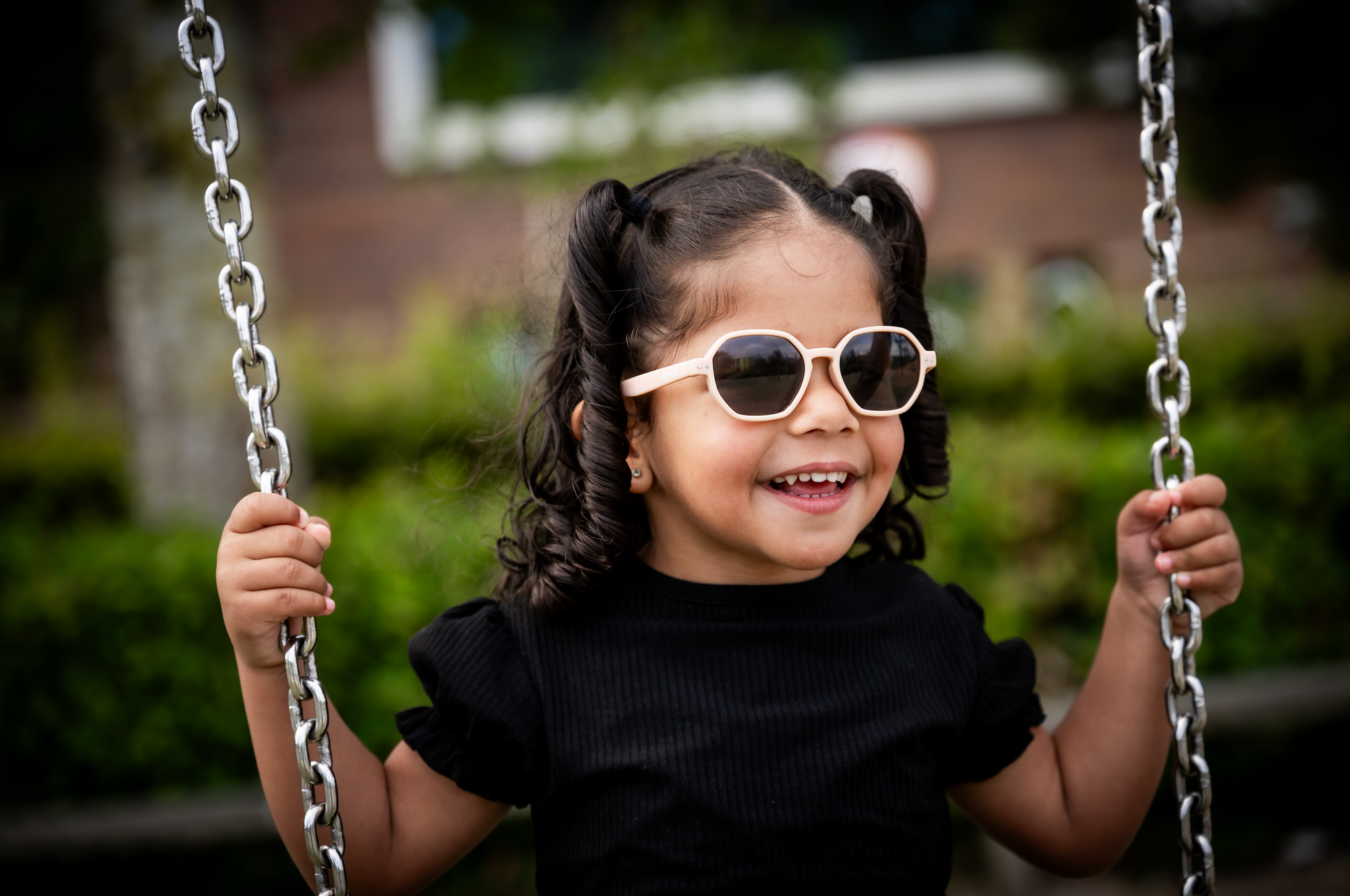
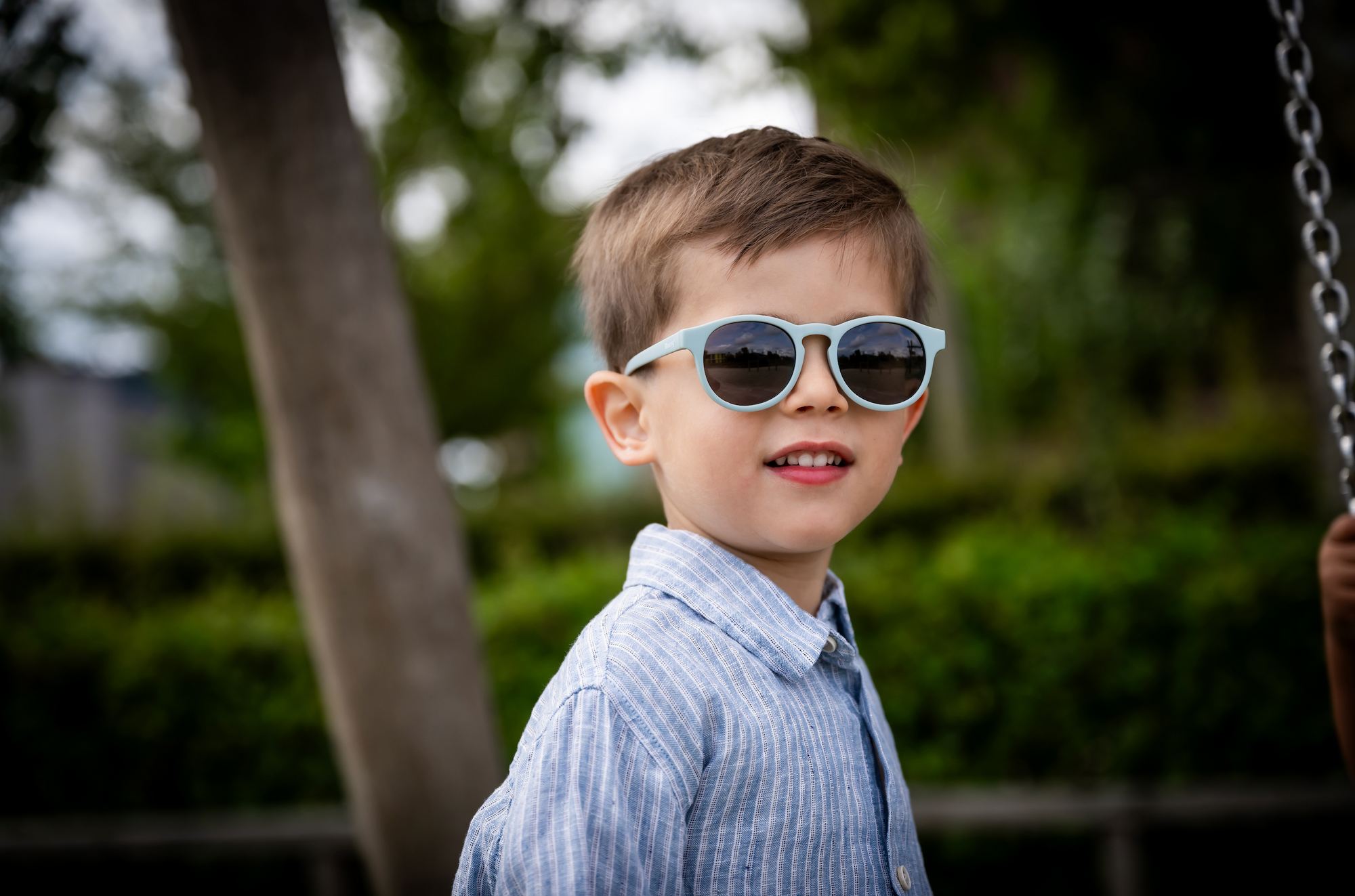
UV400, category 3 and CE: what do they mean for children's sunglasses?
What do UV400, category 3, and the CE mark mean on children's sunglasses? Discover the differences and why good eye protection is so important for babies and children. Maesy explains it simply, with helpful tips and frequently asked questions.
UV400, CE marking, category 3... You’ve probably come across these terms when buying sunglasses for your child. But what do they actually mean? And why are they so important for little eyes? ☀️
Choosing a fun pair of sunglasses is great, of course, but good protection is just as important. Especially for babies and young children, whose eyes are still developing.
In this blog, we explain what UV400, category 3 and the CE marking mean, how they differ, and what to look for in safe baby or children’s sunglasses. Clear and simple, without complicated terms!
☀️ Why do children’s eyes need extra UV protection?
Babies and children love exploring the world outdoors. Playing in the garden, going for a walk in the stroller, or enjoying a sunny vacation day together.
But did you know that children’s eyes are more sensitive to UV radiation than adults’ eyes?
The lenses in young children’s eyes filter UV radiation less effectively. As a result, more harmful radiation can penetrate deeper into the eye. Long-term exposure to UV radiation can contribute to eye damage later in life.
That’s why it’s important to protect little eyes from an early age. And that starts with sunglasses that not only look great, but also do what they’re supposed to!
😎 What does UV400 mean for sunglasses?
UV400 may be the most important label to look for when buying sunglasses for your child.
Sunglasses with UV400 protection block UV radiation with wavelengths up to 400 nanometers. This blocks harmful UVA and UVB rays.
But what’s the difference?
- ☀️ UVA radiation: Penetrates deeper into the eye and can contribute to eye damage over the long term.
- ☀️ UVB radiation: Has more energy and can cause damage to the cornea, among other things.
Good sunglasses with a UV400 filter help protect the eyes against both types of radiation.
💡 Maesy tip: Dark lenses don’t automatically mean that sunglasses offer good UV protection. So always check for the actual UV400 label!
👓 What does category 3 mean for sunglasses?
Alongside UV400, you’ll often see a label such as category 2, 3 or 4. But what does that number mean?
The category indicates how much visible light the lenses let through. The higher the category, the darker the lenses and the less bright sunlight reaches your eyes.
Here are the differences:
| Category | Light transmittance | Suitable for |
|---|---|---|
| 0 | 80-100% | Very little glare protection |
| 1 | 43-80% | Low sunlight |
| 2 | 18-43% | Medium sunlight |
| 3 | 8-18% | Bright sunlight |
| 4 | 3-8% | Exceptionally bright sunlight, such as in high mountains. Very dark for everyday use. |
Category 3 is a great choice for sunny days. The lenses significantly reduce bright visible light without being as dark as Category 4.
Category 4 is intended for exceptionally bright sunlight, for example high in the mountains. These lenses are very dark and let little visible light through. As a result, they can unnecessarily limit young children’s vision, especially when they play alternately in sun and shade. Category 3 is therefore a more comfortable and practical choice for everyday use.
💛 What does the CE marking on children’s sunglasses mean?
Then there’s the CE marking, which you’ll find on all kinds of products, including sunglasses.
With the CE marking, the manufacturer declares that the sunglasses meet the applicable European safety and protection requirements.
European regulations for personal protective equipment apply to sunglasses. The EN ISO 12312-1 standard describes, among other things, technical requirements for sunglasses for general use.
Good to know: CE is not the same as UV400 or Category 3. It’s also not automatically a quality mark indicating that an independent organization has tested each pair of sunglasses individually.
Each of the three labels tells you something different about the sunglasses.
🔍 UV400, Category 3, and CE: what’s the difference?
Here’s a quick overview:
| Label | What does it mean? |
|---|---|
| UV400 | Protection against harmful UV rays up to 400 nm |
| Category 3 | Dark lenses that significantly reduce bright visible sunlight |
| CE marking | Declaration of conformity with applicable European requirements |
So sunglasses can have dark lenses without providing sufficient UV protection. Conversely, lighter lenses with a suitable UV filter can also provide good protection against UV rays.
The combination of good UV protection, suitable light transmission, and a secure fit makes all the difference.
🌈 Why choose Maesy sunglasses?
At Maesy, we believe sunglasses for your little one should not only look good, but above all be safe, comfortable, and practical.
That’s why our baby and children’s sunglasses are designed with protection and comfort in mind:
- ✔️ UV400 protection: Blocks harmful UVA and UVB rays.
- ✔️ Category 3 lenses: Reduce bright sunlight, ideal for sunny adventures.
- ✔️ CE marking: Meets applicable European safety requirements.
- ✔️ Flexible TPE frame: Strong, lightweight, and comfortable for little adventurers.
- ✔️ Adjustable elastic strap: On our baby and toddler styles for a secure fit.
And of course, our sunglasses are available in different styles, sizes and cheerful colours. It's easy to find a pair that offers great protection and suits your little one perfectly!
❓ Frequently asked questions about UV400, category 3 and CE
What's more important: UV400 or category 3?
Both serve different purposes. UV400 protects against harmful UV radiation. Category 3 reduces bright visible sunlight. Both features are valuable in a good pair of children's sunglasses.
Are dark sunglasses always better for children?
No. Dark lenses don't automatically mean that sunglasses block more UV radiation. UV protection depends on the filter, not on how dark the lenses look.
What's the difference between category 3 and category 4?
Category 3 lets about 8 to 18% of visible light through and is suitable for bright sunlight. Category 4 lets only 3 to 8% through and is intended for exceptionally bright conditions. Because these lenses are very dark and can limit vision when light conditions change, category 3 is generally more practical for everyday use by children.
Is a CE mark required on children's sunglasses?
Yes. Sunglasses for general use are covered by European regulations on personal protective equipment and must meet the applicable requirements. The CE mark indicates that the manufacturer declares the product meets these requirements.
Does my baby also need sunglasses with UV400?
Yes, good protection against UV radiation is especially important for young children's eyes. Choose sunglasses with UV400 protection, a comfortable fit and lenses that cover the eyes well.
Want to know what age a baby can start wearing sunglasses? Also read our blog When does your baby need sunglasses?
☀️ Enjoy the sunshine with good protection
A good pair of sunglasses is much more than a cute accessory. With the right UV protection, lenses and fit, you can help protect your little one's sensitive eyes during all their sunny adventures.
Whether you're heading to the playground, going for a walk or enjoying a holiday together, the right sunglasses help your little one comfortably enjoy the great outdoors.
➡️ Discover how to choose the right size baby or children's sunglasses and find the perfect fit for your little adventurer! 💛